

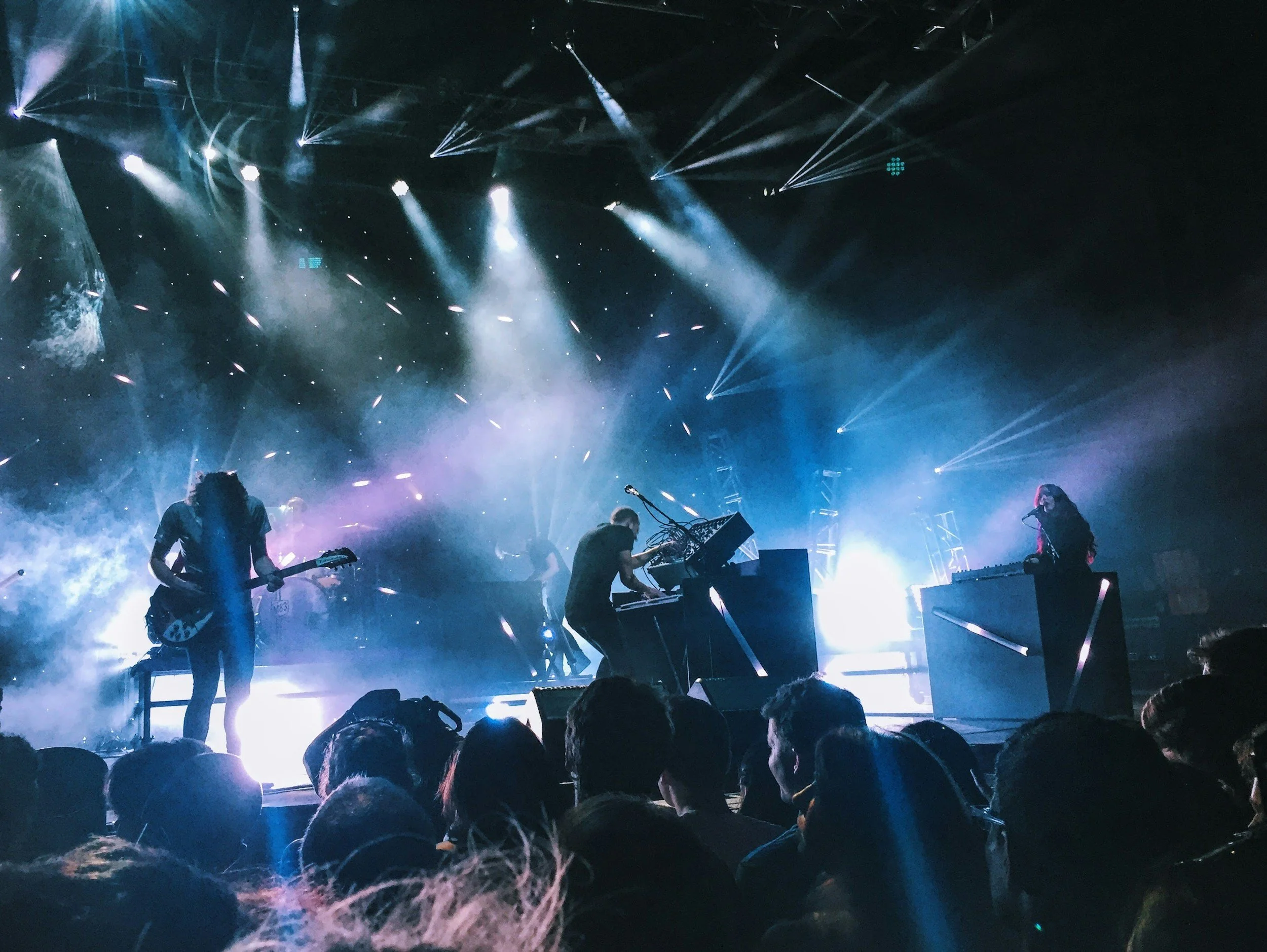
WHAT IS “LIVENESS”, HOW CAN WE MEASURE IT, AND WHY DOES IT MATTER FOR EVENT ACCESSIBILITY?
Accessible technologies only succeed when they augment a performance in a manner that audiences feel is truly live—and festivals currently lack the tools to measure that experience.
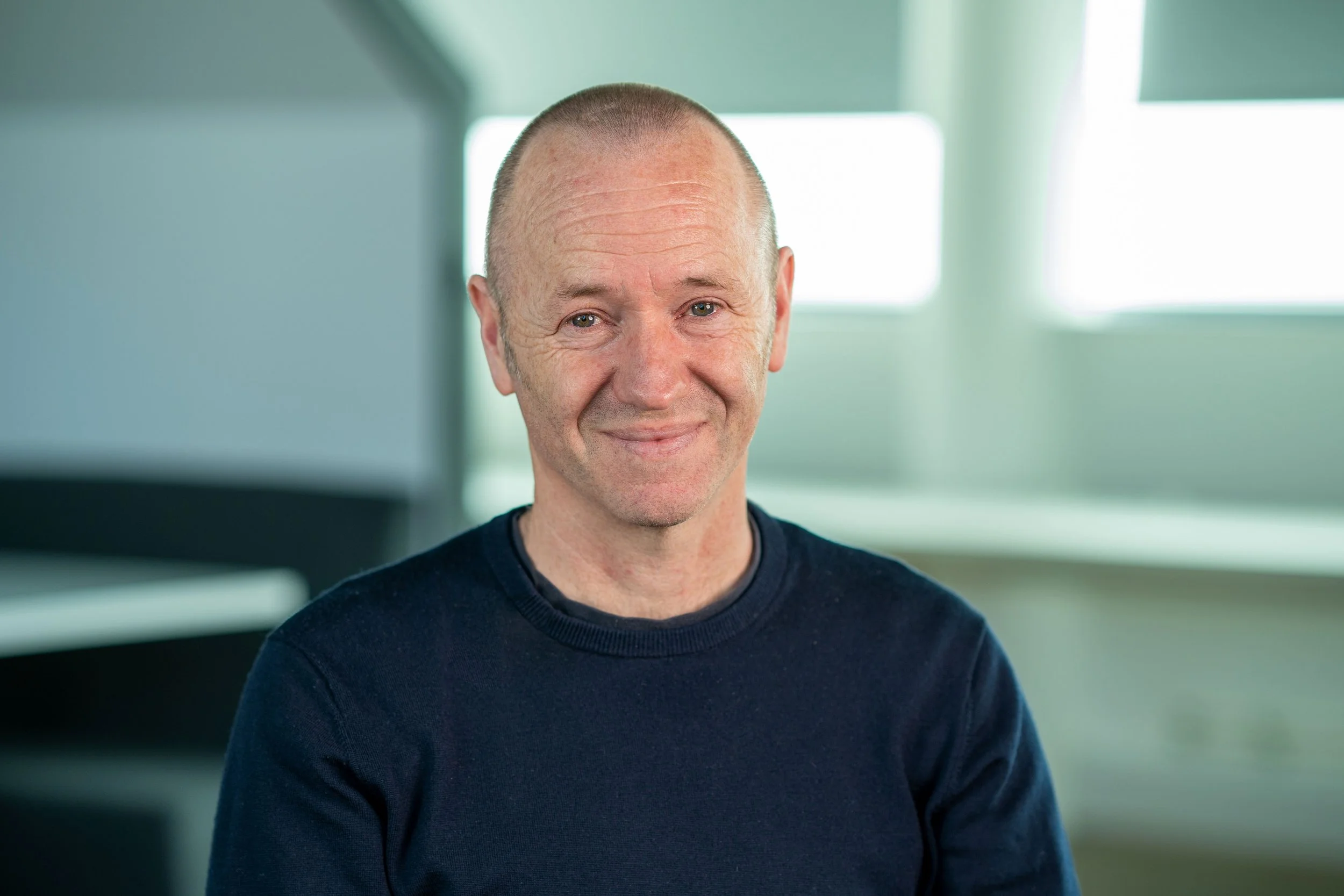
Adrian Bossey (Association for Events Management Education, UK)

Based on: Bossey, A.C.C. (2025) Developing a Scale Measuring Perceptions of ‘Liveness’ During ICT Augmented Performances Designed to Increase Accessibility On-site at Music Festivals. 29(6), Event Management journal https://doi.org/10.3727/152599525X17483017436931
EXECUTIVE SUMMARY
Accessible technologies at music festivals succeed or fail based in part on whether audiences perceive the experience they provide as feeling genuinely “live.”
Liveness is not just intuitive; it can be deliberately designed, evaluated, and evidenced.
Existing digital event accessibility tools overlook liveness, creating a critical measurement gap.
A dedicated liveness scale enables organisers to assess how authentic specific augmentations feel, to inform deployment of accessible ICT.
Measuring perceived liveness in this way supports evidence-based inclusion, moving festivals beyond compliance toward meaningful participation.
INTRODUCTION
At a summer music festival, thousands move in unison as basslines ripple across an open field. For many, the experience feels instinctively “live”: immediate, shared, and unmistakably real. Yet for a growing number of audience members, access to that moment depends on technology—subtitles on a phone, vibrations through a vest, images relayed via screens. The question is no longer whether these augmentations work, but whether they feel live.
This tension sits at the heart of contemporary music festivals. Live music has long been celebrated for its authenticity—the sense of “being there” that cannot be replicated elsewhere (Phelan, 1993). However, as festivals increasingly adopt digital tools to improve accessibility for people who are d/Deaf, disabled, or neurodivergent inclusion (Lazar, Goldstein & Taylor, 2015; Bossey, 2022), they risk colliding with deeply held assumptions about what counts as a genuine live experience. An augmentation that improves access but diminishes perceived liveness may be technically successful and socially progressive, yet experientially hollow.
Audience reactions suggest this distinction matters. Some technologies—for example haptic systems that translate sound into physical sensation—are often described as immersive and authentic. Others generate hesitation, uncertainty, or ambivalence.
These reactions are not simply preferences; they shape whether inclusive innovations are accepted, resisted, or ignored altogether. Effective experiences are co-created by producers and attendees (Getz, 2018) and embedding this approach into event design can help address exclusion.
Despite this, festival organisers often make decisions about accessibility technologies with limited evidence about how “live” those experiences actually feel to the people they are designed to include. In an industry driven by audienceexperience, atmosphere, and affect, this approach is increasingly untenable.
This article starts from a simple proposition: if liveness influences whether accessible technologies are embraced, then liveness must be understood, contextualised, and measured. Without that, well-intentioned innovations may fail to deliver on their promise of inclusion.
“An augmentation that improves access but diminishes perceived liveness may be technically successful and socially progressive, yet experientially hollow.”
THE PROBLEM AND/OR OPPORTUNITY
Music festivals face a dual challenge. On one hand, they are under growing social, legal, and moral pressure to become more accessible to people who are d/Deaf, disabled, or neurodivergent (Calver et al., 2023). On the other, they operate within a cultural economy where authenticity and “liveness” are central to audience value (Bossey, 2023a). The problem arises when these two imperatives are treated as separate: accessibility as a compliance issue, and liveness as an aesthetic one.
The opportunity lies in recognising that accessibility technologies are not neutral add-ons. They actively shape how performances are perceived and felt. When augmentations such as real-time subtitles, haptic feedback, or video mediation align with audience expectations of liveness, they can deepen engagement and expand participation.
When they do not, they risk being underused or rejected—regardless of their technical sophistication.
This article reframes accessibility as an experiential design challenge. It argues that festivals need tools that help them understand not just whether an augmentation improves access, but how it alters the felt experience of the performance. Measuring perceived liveness offers a way to bridge inclusion and experience, turning accessibility from a bolt-on into a core component of festival value creation.
The timing of this discussion is critical. Nearly a quarter of the UK population live with a long-term physical or mental health condition (House of Commons Library, 2022), representing a substantial and growing audience for live events. At the same time, the music festival sector is undergoing rapid technological transformation (Maaso, 2018), driving new business models incorporating blended live and mediatized experiences (Nilsson, 2020; Connock, 2024). Accessible ICT—once peripheral—is becoming integral to how live performances are produced, mediated, and consumed.
These shifts are unfolding against a complex political backdrop, where commitments to inclusion and equality are increasingly contested. For festival organisers, this creates both risk and responsibility. Poorly implemented accessibility measures can be perceived as tokenistic (Bossey 2020), while well-designed ones can set new benchmarks for inclusive cultural participation.
WHY DOES THIS MATTER NOW?
Looking ahead, the scope of augmentation is expanding beyond sound and vision to include touch, balance, bodily awareness, and other sensory dimensions (Bossey, 2023b). As these technologies proliferate, organisers will face difficult choices about which innovations to adopt, scale, or discard. Without robust evidence about how different augmentations affect perceptions of liveness, those decisions will be guided by intuition, cost, or supplier claims rather than audience experience.
In this context, the ability to systematically evaluate perceived liveness is no longer optional. It is a strategic capability for festivals seeking to remain culturally relevant, socially legitimate, and experientially compelling.
Existing research on live music experience has delivered valuable insights into motivation, atmosphere, and emotional response. However, most established scales assume a physically co-located, non-augmented audience and largely overlook accessibility. As a result, they struggle to account for how digital interventions reshape what audiences experience as “live.”
At the same time, academic debates about liveness have often been abstract or polarised. Some cling to “classic” notions of liveness rooted in physical co-presence (Tsangaris, 2020), while others argue that mediation fundamentally redefines the live experience (Auslander, 2012, Meyer-Dinkgrafe, 2015 and Sanden, 2019). What is missing is an applied, audience-facing approach that recognises liveness as situational, contingent, and shaped by specific technologies in specific contexts.
HOW DOES THIS ADD TO WHAT WE ALREADY KNOW?
This article advances the conversation by treating liveness as something that can—and should—be measured in relation to particular augmentations. Rather than asking whether a performance is live in principle, it asks how live it feels to audiences when experienced through subtitles, haptics, screens, or other accessible technologies.
By introducing a dedicated liveness scale designed with and for d/Deaf, disabled, and neurodivergent audiences, the article shifts liveness from a theoretical abstraction to a practical decision-making tool. In doing so, it challenges organisers and researchers alike to rethink how authenticity, inclusion, and innovation intersect at contemporary music festivals.
Key Arguments
-
For decades, event managers relied on a shared, largely unspoken understanding of what made a music festival feel “live.” Artist performance, artist–audience interaction, physical co-presence, amplified sound and crowd energy were assumed to deliver authenticity almost by default. That assumption no longer holds.
As performances become increasingly augmented by digital technologies—screens, devices, haptics, subtitles—liveness becomes unevenly distributed across audiences. What feels immersive and authentic to one group may feel distant or artificial to another. Crucially, this variation is not random; it is patterned by access needs, familiarity with technology, and prior experience of live music.
The key implication is that liveness can no longer be treated as a background condition. It is a design variable. Yet most festivals lack mechanisms to assess how different audiences actually experience augmented performances. Decisions are therefore made reactively or symbolically, rather than on evidence of what sustains or enhances the live experience.
A liveness scale addresses this gap by translating an abstract concept into something observable and comparable. It enables organisers to move from assumptions (“this should feel live”) to insight (“this feels live to these audiences, under these conditions”). In doing so, it reframes liveness as a measurable dimension of experience rather than a nostalgic ideal that resists technological change.
-
Accessible ICT is often evaluated in binary terms: does it work or not? Does it technically deliver subtitles, vibrations, interpretation, or description? However, field evidence suggests this framing is insufficient. Audiences respond not only to whether an augmentation functions, but to whether it preserves the sense of a shared, unfolding event.
Some technologies—particularly haptic systems that translate sound into bodily sensation—were consistently perceived as enhancing authenticity. Participants described these interventions as deepening their connection to the performance rather than mediating it away. In contrast, less familiar or poorly contextualised technologies generated uncertainty, even when their functional benefits were clear.
This distinction matters because adoption depends on more than provision. An augmentation that technically improves access but is perceived as distancing, distracting, or “not really live” is unlikely to be embraced. Over time, this can reinforce scepticism about accessibility initiatives more broadly.
The liveness scale makes this dynamic visible. By capturing how different augmentations are experienced relative to one another, it allows organisers to prioritise investments that align inclusion with authenticity. In practical terms, it helps answer a critical question: which technologies feel like extensions of the live event, and which feel like substitutes for it?
-
One of the most consequential findings from the scale development process was not about technology at all, but about communication. Early iterations revealed that academic language, abstract phrasing, and complex sentence structures actively undermined accessibility—particularly in noisy, cognitively demanding festival environments.
Terms such as “extent,” “augmentation,” or “on-site perspective” created friction for respondents. In contrast, plain English phrasing—short, concrete, familiar—improved comprehension and response quality. Similarly, the introduction of visual and symbolic prompts reduced cognitive load and supported more inclusive participation.
These insights matter because perception of liveness begins before the performance itself. If audiences struggle to understand how an experience is framed, described, or evaluated, the technology risks being perceived as alienating regardless of its sensory impact.
The scale’s iterative co-design process demonstrates that accessible innovation is as much about how questions are asked as which technologies are deployed. For practitioners, the lesson is clear: inclusive design must extend beyond infrastructure to encompass language, signage, interfaces, and evaluation tools. Liveness is shaped not only by what audiences experience, but by how they are invited to make sense of it.
-
Audience perceptions of liveness are highly contextual. They vary by genre, performance format, venue layout, audience composition, and prior exposure to technology. A haptic intervention that feels immersive at one festival may feel intrusive or irrelevant at another. Similarly, subtitles or screen-based mediation may enhance liveness for some audiences while diminishing it for others.
This variability explains why general event experience scales struggle to capture meaningful differences in augmented contexts. They aggregate experiences that are, in practice, highly specific. The liveness scale advances understanding by anchoring measurement to particular technologies and on-site conditions.
Rather than producing universal rankings of “most live” or “least live” technologies, the scale supports comparative learning across contexts. Over time, data collected across multiple festivals, genres, and audience groups can reveal patterns—what works where, for whom, and why.
For organisers, this shifts decision-making from imitation to contextual strategy. Instead of copying innovations from other festivals, they can test and refine augmentations in relation to their own audiences. Liveness, in this sense, becomes locally produced rather than globally prescribed.
-
Accessibility in live events is often framed through compliance: meeting minimum standards, satisfying licensing conditions, or responding to complaints. While necessary, this approach risks positioning accessibility as a constraint rather than an opportunity for innovation.
The liveness scale supports a different trajectory. By validating the experiences and perceptions of d/Deaf, disabled, and neurodivergent audiences, it provides evidence that can inform proactive design, investment, and policy decisions. It creates a feedback loop in which audience insight shapes future provision.
At an organisational level, this enables accessibility to be embedded into planning cycles, supplier tenders, and post-event evaluation. At a sector level, aggregated findings can inform funding priorities, industry guidance, and regulatory frameworks that emphasise quality of experience rather than minimal provision.
Perhaps most importantly, measuring liveness acknowledges that inclusion is not simply about access to space, but access to meaning. When audiences feel that an augmented performance is genuinely live, they are more likely to feel a sense of belonging, connection, and cultural participation.
In this way, the scale reframes accessibility from an ethical obligation into a source of experiential value—one that strengthens festivals as inclusive, adaptive, and future-facing cultural institutions.
CONCLUSIONS
Music festivals are no longer defined solely by sound, stage, and crowd. They are increasingly shaped by the technologies that mediate access, extend perception, and determine who can meaningfully participate. In this environment, liveness can no longer be treated as an assumed quality of live music. It is experienced unevenly, interpreted subjectively, and shaped by design choices that are often made without systematic evidence.
This article has argued that perceived liveness is a critical, yet underexamined, factor in the adoption of accessible ICT at music festivals. When augmentations feel live, they support authenticity, belonging, and engagement. When they do not, they risk being marginalised—regardless of their technical capability or inclusive intent. The challenge for organisers, therefore, is not simply to provide access, but to design access in ways that preserve the essence of live performance.
The proposed liveness scale responds directly to this challenge. By offering a structured way to capture how different audiences perceive augmented performances, it translates an abstract debate into a practical tool. It allows festivals to move from intuition to insight, from symbolic gestures to evidence-based inclusion.
More broadly, the scale reframes liveness as contextual rather than absolute. It recognises that what feels live depends on who is experiencing the performance, through which technologies, and in what setting. This perspective does not dilute the value of live music; it strengthens it by acknowledging diversity of experience.
As festivals navigate rapid technological change and rising expectations around inclusion, the ability to measure what audiences actually feel—rather than what organisers assume—will become a defining capability. Liveness, once taken for granted, now demands attention, care, and accountability.
“When augmentations feel live, they support authenticity, belonging, and engagement; when they do not, they risk marginalisation regardless of their technical capability.”
PRACTICAL ACTIONS
For festival managers, industry leaders, and policymakers, the implications of measuring perceived liveness are immediate and actionable. The value of a liveness scale lies not in abstract insight, but in how it can be integrated into everyday decision-making around accessibility, technology, and experience design.
Embed liveness into accessibility planning
Accessibility should be addressed at the earliest stages of festival planning, alongside programming, site design, and audience development. Organisers can deploy a liveness scale during pilot installations of accessible ICT—such as haptic systems, subtitles, or screen-based mediation—to assess how these interventions are perceived before full rollout. This helps shift accessibility from reactive provision to proactive design.
Use audience evidence to guide investment decisions
Budgets for accessible technologies are often constrained. Item-level responses from a liveness scale allow organisers to identify which augmentations generate the strongest sense of authenticity for their audiences. For example, if haptic interventions consistently score highly on perceived liveness while other tools generate mixed responses, this evidence can justify prioritisation in procurement and supplier negotiations.
Support ongoing dialogue with d/Deaf, disabled, and neurodivergent audiences
Deploying the scale as part of continuous audience consultation signals that lived experience matters. Repeated use across editions of a festival can reveal whether perceptions of liveness improve as audiences become more familiar with specific technologies. This longitudinal insight supports trust-building and co-creation rather than one-off consultation.
Integrate findings into supplier tenders and partnerships
Festival organisers increasingly rely on external suppliers for accessibility solutions. Including evidence of perceived liveness in tender criteria encourages suppliers to think beyond functionality and towards experiential quality. Over time, this can raise standards across the supply chain and stimulate innovation aligned with audience experience rather than novelty.
Inform policy, funding, and licensing frameworks
For policymakers and funding bodies, aggregated data on perceived liveness provides a more nuanced basis for evaluating accessibility initiatives. Rather than focusing solely on compliance or presence of provision, decision-makers can assess whether proposed augmentations are likely to deliver meaningful, authentic experiences. Licensing authorities, in particular, could use such evidence when assessing applications that involve significant technological mediation.
Build organisational capability around experience evaluation
Finally, adopting a liveness scale encourages festivals to strengthen their broader evaluation practices. Collecting data in challenging on-site environments requires investment in staff training, accessible survey design, and appropriate physical spaces for participation. These capabilities have benefits beyond accessibility, improving overall understanding of audience experience.
Taken together, these actions position liveness as a strategic lens through which accessibility, innovation, and experience can be aligned. For leaders willing to engage with evidence rather than assumption, the reward is not only more inclusive festivals, but more compelling live experiences for everyone.
IMPLEMENTATION CHALLENGES
While the liveness scale offers a practical and transferable tool, its application is not without limitations. First, collecting robust data in live festival environments remains challenging. Noise, crowd density, connectivity issues, and time pressure can affect response rates and data quality. Without appropriate planning—such as quiet spaces or alternative paper-based formats—certain audience groups may still be excluded from participation.
Second, perceptions of liveness are inherently subjective and context-dependent. Results should therefore be interpreted comparatively rather than as absolute measures of success or failure. A high liveness score in one setting does not guarantee similar outcomes elsewhere, particularly across genres, audience compositions, or cultural contexts.
Third, there is a risk of instrumentalising the scale as a tick-box exercise. Used superficially, it could reinforce compliance-driven approaches rather than meaningful engagement with d/Deaf, disabled, and neurodivergent audiences. The scale is most effective when embedded within genuine co-design processes, not deployed in isolation.
Finally, resource constraints may limit adoption, particularly for smaller festivals. Time, staffing, and expertise are required to administer, analyse, and act upon findings. Recognising these constraints is essential to ensuring the scale supports inclusive practice without imposing unrealistic burdens on organisers or audiences.

REFERENCES
Bossey, A. (2020) Accessibility All Areas? UK live music industry perceptions of current practice and Information and Communication Technology improvements to accessibility for music festival attendees who are Deaf or disabled. International Journal of Event and Festival Management. 11(1), 6-25. https://doi.org/10.1108/ijefm-03-2019-0022
Bossey, A. (2022) Gatekeeper perceptions on adopting environmentally sound Information and Communication Technology enhanced live performances to improve the sustainability of music festivals. International Journal of Event and Festival Management. 13(3), 307-325. https://doi.org/10.1108/IJEFM-07-2021-0060
Bossey, A.C.C. (2023a). Piloting test scales to measure perceptions of “liveness” regarding ICT-enhanced performances at music festivals. Event Management, 27(5), 1–28. https://doi.org/10.3727/152599523X16896548396798
Bossey, A. (2023b) Liveness 4.0: a new paradigm for accessibility at music festivals. In: Brown, T and Drakeley, C (editors) Virtual Events Management. 126-137. Goodfellow Publishers. ISBN 978-1-915097-03-3
Calver, J. Dashper, K. Finkel, R. Fletcher,T. Lamond, I.R. May, E. Ormerod, N. Platt, L & Sharp, B (2023): The (in)visibility of equality, diversity, and inclusion research in events management journals, Journal of Policy Research in Tourism, Leisure and Events. 17(2) 424-448. https://doi.org/10.1080/19407963.2023.2228820
Connock, A (2024) Media Management and Live Experience. Routledge. ISBN:9781032563671
Getz, D (2018) Event Evaluation – Theory and methods for event management & tourism. Goodfellow Publishers. ISBN13:9781911396611
House of Commons Library (2022 August 23) UK disability statistics: Prevalence and life experienceshttps://commonslibrary.parliament.uk/research-briefings/cbp-9602/ HMSO
Lazar, J, Goldstein, D and Taylor, A (2015) Ensuring Digital Accessibility Through Process and Policy. Elsevier Science & Technology. ISBN:9780128006467
Maaso, A (2018) Music streaming, festivals and the eventisation of music. Popular Music and Society 41(2), 154-175. https://doi.org/10.1080/03007766.2016.1231001
Meyer-Dinkgraffe (2015) Liveness: Phelan, Auslander and after. Journal of Dramatic Theory and Criticism, 29(2), 69-79. https://doi.org/10.1353/dtc.2015.0011
Nilsson, L (2020) Hybrid events: Breaking the Borders. (1-63) https://www.theseus.fi/bitstream/handle/10024/344231/Nilsson_Linda.pdf?sequence=2
Sanden, P (2019) Rethinking Liveness in the Digital Age. In: Cook N, Ingalls MM, Trippett D, (Editors). The Cambridge Companion to Music in Digital Culture. 178-192. https://doi.org/10.1017/9781316676639.017
Tsangaris, M. (2020). The eternal course of live music: Views and experiences of an audience. In E. Mazierska, L. Gillon & T. Rigg (Authors), The Future of Live Music. Bloomsbury Academic. https://doi.org/10.5040/9781501355905.0021
AUTHOR(S)
Adrian Bossey, Chair, Association of Events Management Education (AEME), UK.
Adrian Bossey is Chair of the Association for Events Management Education and a Trustee of Attitude is Everything. Previously, he was a Head of Subject at Falmouth University, overseeing events, tourism and business courses. As a former artist manager whose clients included Carter the Unstoppable Sex Machineand Chumbawumba, Adrian has both attained a UK Number One album and achieved a Guardian UK number one subject ranking in Hospitality, Events Management & Tourism. His research interests include potential digital futures for accessible live performances for people who are d/Deaf, disabled or neurodivergent at music festivals. https://orcid.org/0000-0002-9874-6323 www.linkedin.com/in/adrian-bossey-3aa9a116
Disclaimer
The views and insights expressed in this article are those of the author(s) and reflect their research and professional expertise. They do not represent the views of the Centre for Events & Festivals CIC or its partners.